
A SIGN FROM PARIS
WEEK 3
In February, I visited Paris, and it ended up being a really inspiring trip from a design perspective. As a graphic design student with a strong interest in typography and visual identity, I found myself paying attention to details that most people might overlook. One of the things that stood out to me the most was the Paris Métro, particularly the entrances. What might seem like a purely functional part of the city actually felt carefully considered and full of character.
So I did some research.
In the lead-up to the Exposition Universelle, Paris was developing its new Métro system to modernise the city. The Compagnie du chemin de fer métropolitain de Paris wanted the entrances to reflect the same level of thought and design as the rest of the city, so they commissioned Hector Guimard to create something visually appealing as well as functional. This approach really stood out to me, as it shows how design was valued even in public infrastructure.
Guimard’s designs, created between 1900 and 1912, introduced two main styles: the Aediculae and the Entourages. The Aediculae are covered entrances, with glass canopies and intricate ironwork that almost feel architectural and sculptural at the same time. In contrast, the Entourages are more open, but still highly detailed, with green-painted cast iron designed to resemble bronze. What I found most interesting was the typography, the flowing “METROPOLITAIN” lettering is completely integrated into the structure, making it feel like part of the design rather than just signage. It’s expressive, distinctive, and instantly recognisable, which is something I find really inspiring as someone interested in branding.
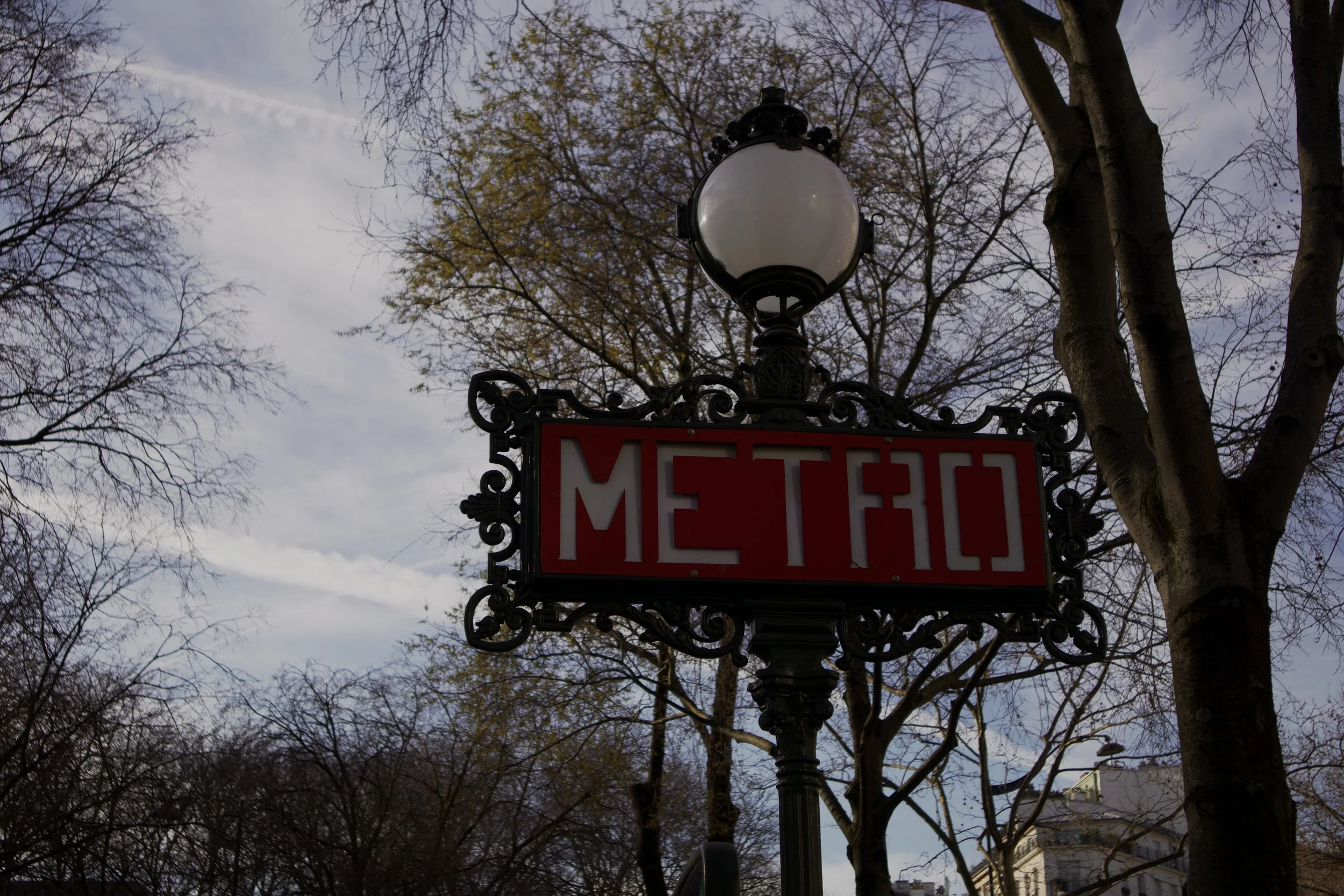
From 1910 onwards, the designs became more understated, but still maintained a strong visual identity. The Paris Metro Company began using simpler entrance surrounds, often featuring elegant candelabras produced by the Val d’Osne foundry. These were topped with glowing globes to help illuminate the entrances, along with backlit “METRO” signs in white lettering on a red background. Even though these designs are less decorative than Guimard’s earlier work, they still feel intentional. The balance between clarity and style is really effective, and it shows how design can evolve while still staying consistent.
Walking around the city and seeing these entrances in different areas made me realise how design can shape the way people experience a place. The Métro signage isn’t just there to guide people, it adds to the identity of Paris itself. It made me think more about how typography and branding can exist beyond digital or print formats and become part of real, physical environments.
Overall, the trip really encouraged me to look more closely at the world around me and think about design in a broader way. It’s made me want to experiment more, take creative risks, and push my ideas further, especially when considering how design works in everyday contexts.